The Most Important Criteria for Choosing a Rug for Seniors
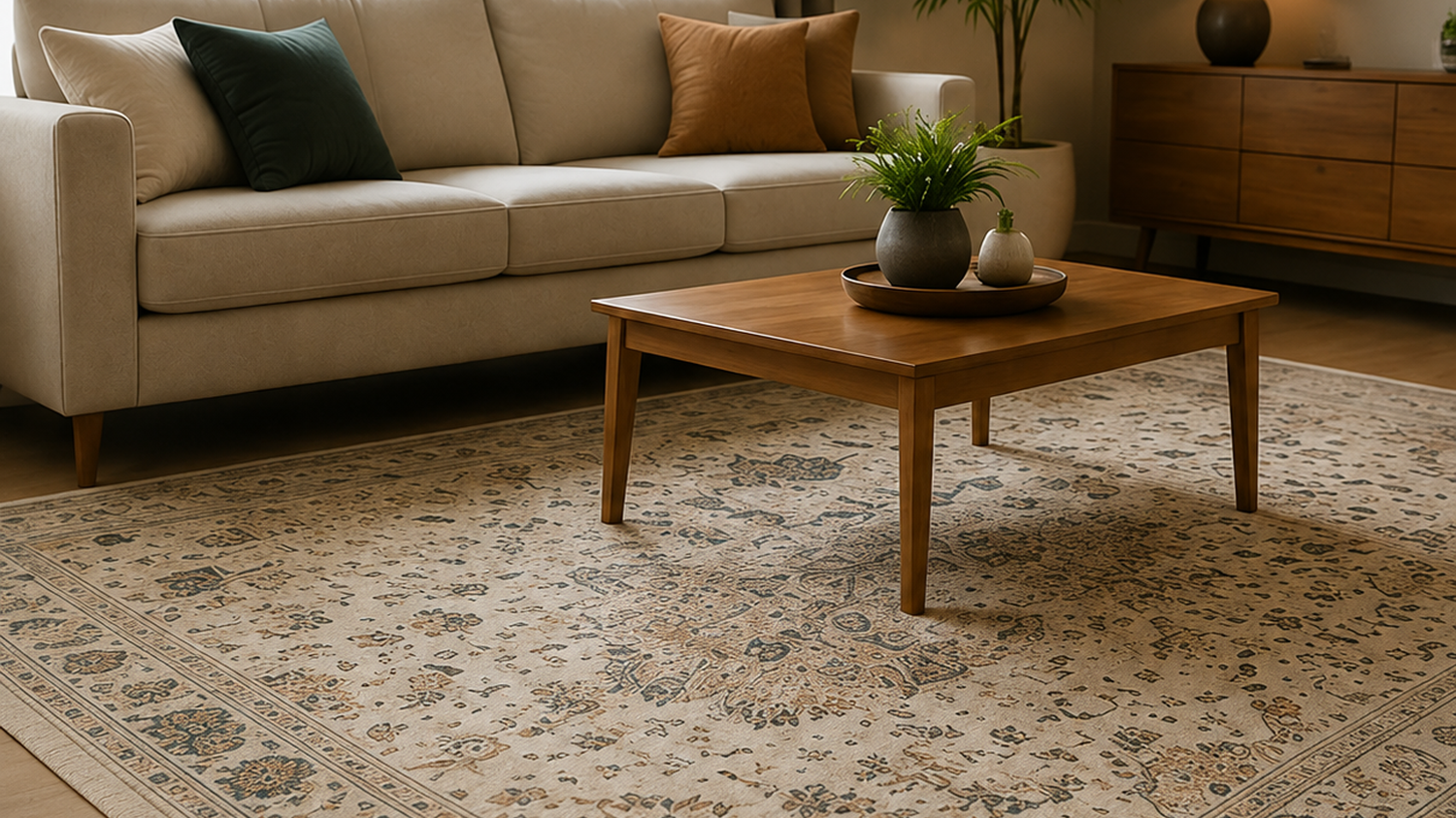
Choosing a Rug for Seniors: The Ultimate Guide
Selecting a rug for a senior’s home is not just about aesthetics and matching the decor. In this environment, the most critical criteria include:
-
Reducing the risk of falls and tripping
-
Ensuring comfort while walking
-
Providing adequate softness to minimize injury in case of a fall
-
Stability and grip on the floor
-
Allowing easy movement for canes, walkers, or wheelchairs
An unsuitable rug can quickly become a dangerous obstacle in walkways rather than a source of comfort. Therefore, a balance must be struck between softness and safety in a senior’s home. Low-pile, dense rugs are generally the most appropriate choices, as they provide a softer surface while significantly lowering the risk of snagging a foot or a walker’s wheel.
1. Preventing Slips and Rug Movement
One of the greatest hazards in a senior’s home is a rug shifting suddenly on hard surfaces such as:
-
Ceramic tile
-
Stone
-
Hardwood (Parquet)
-
Laminate
A senior-friendly rug must:
-
Have a non-slip backing
-
Stay firmly in place on the floor
-
Have corners that do not curl up
Using rug grippers or anti-slip pads underneath smaller rugs can also help keep them securely anchored.
2. Rug Pile Height: Short or Long?
A common mistake is choosing high-pile or shaggy rugs for the elderly. While these rugs are soft, they can:
-
Cause tripping and foot snagging
-
Make pushing a walker difficult
-
Create uneven surface levels
For a senior’s residence, the most suitable rugs are typically:
-
Low-pile
-
Densely woven
-
Uniform in surface texture
Pile Height Comparison Guide
| Rug Type | Comfort Level | Safety for Seniors | Recommendation |
| Shaggy & High-Pile | Very Soft | Low | Not Recommended |
| Medium-Pile | Soft and Comfortable | Medium | Use with Caution |
| Low-Pile & Dense | Adequate | High | Best Choice |
| Flatweave (No Pile) | Moderate | High | Ideal for High-Traffic Paths |
The Best Rug Materials for Seniors
Heat-Set Acrylic Rugs
One of the best choices for senior living spaces.
-
Pros: Excellent softness, high durability, beautiful appearance, low shedding, and good resistance to foot traffic.
-
Best for: Bedrooms, living rooms, and sitting areas.
Polyester Rugs
-
Pros: Lightweight, available in a wide variety of colors, and easy to clean.
-
Cons: Generally less durable than acrylic.
Wool Rugs
-
Pros: Natural, extremely soft, and warm.
-
Cons: Higher price point and requires more careful maintenance.
Material Comparison Guide
| Material | Softness | Durability | Maintenance | Suitability for Seniors |
| Heat-Set Acrylic | Excellent | Excellent | Easy | ⭐⭐⭐⭐⭐ |
| Polyester | Good | Moderate | Easy | ⭐⭐⭐⭐ |
| Wool | Excellent | Excellent | Moderate | ⭐⭐⭐⭐ |
| Shaggy | Very Soft | Moderate | Difficult | ⭐⭐ |
The Best Rug Colors for Seniors
Rug color isn’t just an aesthetic issue; in a senior’s home, visibility and boundary recognition are crucial.
-
Ultra-light rugs may show stains too quickly and fail to provide a clear visual contrast against light-colored floors.
-
Extremely dark rugs can reduce overall visibility in certain spaces and make the room feel smaller.
Recommended Colors:
-
Grey and Elephant Grey (Charcoal): Modern, hides dirt well, and blends with most decors.
-
Cream and Beige: Creates a sense of warmth, brightens up low-light rooms, and fosters a calming atmosphere.
-
Light Brown and Taupe (Nescafe): Perfect for classic interiors and wood furniture.
Colors to Use with Caution:
-
Pure White: Shows stains instantly and makes it harder to spot debris.
-
Very Dark Colors: Can obscure the boundary between the rug and the floor; dust also appears more visible.
Best Rugs for Different Rooms in a Senior’s Home
Bedroom Rugs
-
Key Features: Soft, warm, low-pile, and without high, bulky edges.
-
Recommendation: 1000 or 1200-reed acrylic rugs in calming tones like cream, light grey, or beige.
Living Room Rugs
-
In the living room, aesthetics hold more weight, but safety remains the priority.
-
Recommendation: Low-pile rugs, medium patterns, and a non-slip foundation.
Hallway Rugs
-
Hallways are critical areas for fall prevention.
-
Recommendation: Secure runner rugs with appropriate width and no loose, curling edges.
Rugs for Seniors Using Walkers or Wheelchairs
If the individual uses a walker, cane, or wheelchair, pay close attention to rug thickness. The rug must not:
-
Be overly thick or plush
-
Have raised, bulky edges
-
Hinder the movement of wheels
Low-profile, dense rugs facilitate the smoothest movement for mobility aids.
Dangerous Mistakes When Buying Rugs for Seniors
-
Choosing Shaggy and High-Pile Rugs: They look beautiful but significantly increase tripping hazards.
-
Using Small Throw Rugs Without Grippers: A shifting rug is a major cause of falls.
-
Patching Together Multiple Small Rugs in Walkways: Connecting several small rugs creates uneven surfaces and hazardous edges.
-
Selecting Overly Thick Rugs: Excessive thickness can make walking difficult and restrict walker movement.
-
Ignoring Curling Corners: Flipped or curled rug corners are a leading cause of tripping.
Purchasing Checklist for Senior-Friendly Rugs
Before buying, ask yourself:
-
[ ] Does the rug stay firmly on the floor?
-
[ ] Is the pile short and dense?
-
[ ] Can a walker roll over it easily?
-
[ ] Do the corners lie completely flat?
-
[ ] Is it easy to wash and maintain?
-
[ ] Does the color maintain good room visibility?
Frequently Asked Questions (FAQs)
-
What is the best type of rug for seniors?
Generally, low-pile, dense rugs with a non-slip backing are the best choice. They offer softness while minimizing tripping hazards.
-
Are shaggy rugs suitable for the elderly?
No. Despite their softness, the long fibers can trap feet and make maneuvering a walker extremely difficult.
-
Is a thick or thin rug better?
For seniors, a rug with medium thickness and short pile is best. Excessively thick rugs pose slipping and snagging risks.
-
Do rugs reduce injuries from falls?
Suitable rugs provide a softer landing surface than hard floors and can cushion the impact in some scenarios. However, it is vital that the rug is secure and has no loose edges.
-
What is the best rug color for a senior’s room?
Colors like cream, beige, light grey, and taupe (nescafe) are excellent choices because they create a calm environment and are easier to maintain.
Conclusion
The ideal rug for a senior’s home isn’t just soft and pretty; it must be safe, stable, low-pile, and suitable for daily mobility. When selecting a rug for the elderly, prioritize the following features in this order:
-
Slip prevention
-
Appropriate pile height
-
Walking comfort
-
Washability
-
Decor coordination
The right choice can transform a senior’s home into a warmer, more comfortable, and much safer environment.