The best carpet for homes with children or pets
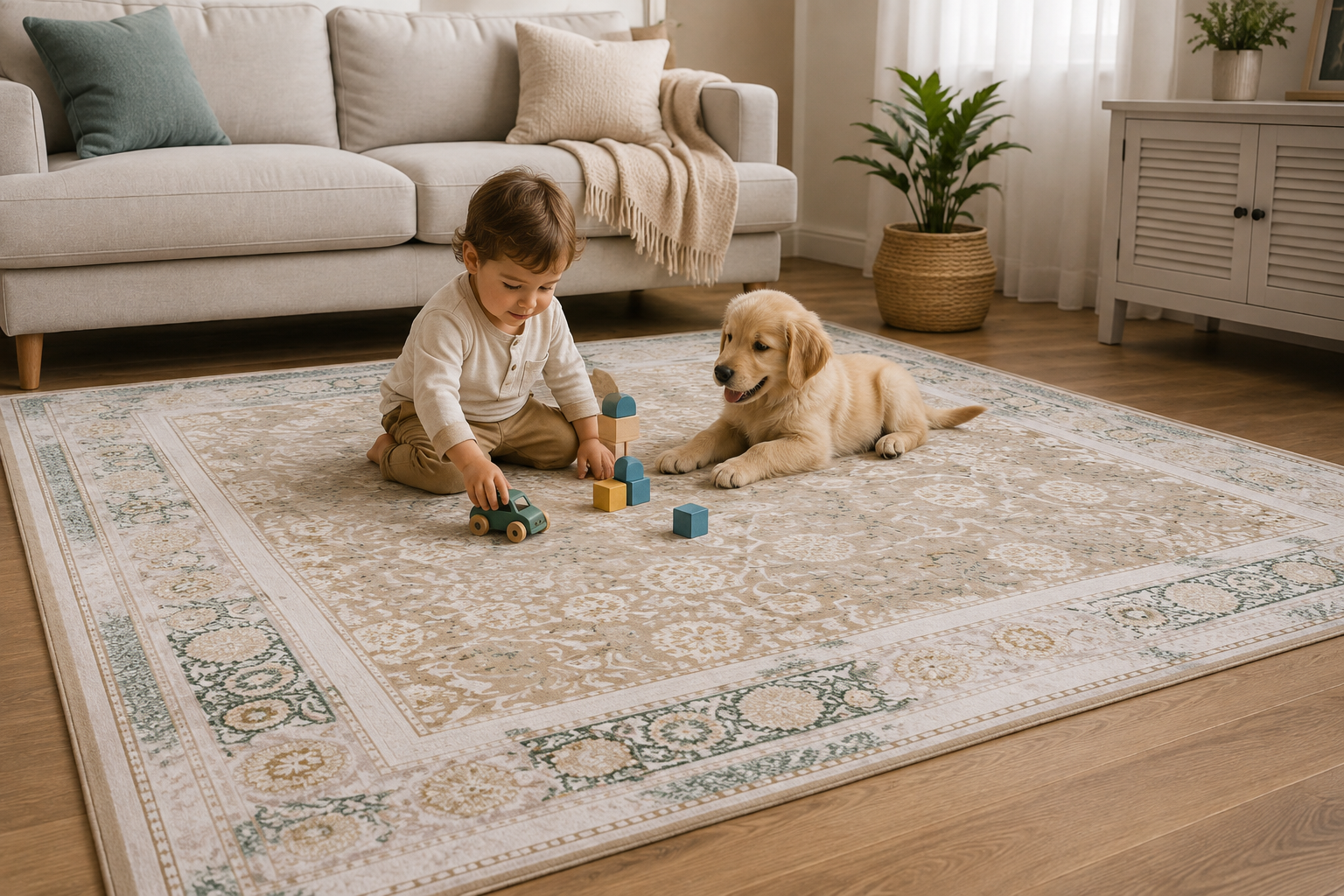
The Best Rugs for Homes with Kids or Pets
The best rug for homes with children or pets is durable, low-pile, dense, and easy to wash, ensuring that stains do not quickly penetrate deep into the fibers and daily cleaning is not a hassle. Children spend a lot of time sitting and playing on rugs, often spilling food or drinks, while pets can track hair, paw dirt, moisture, and various stains onto the surface. Therefore, visual appeal shouldn’t be the only criterion; yarn material, pile height, colorfastness, resistance to matting, and quick spot-cleaning capabilities must also be evaluated. The Carpet and Rug Institute (CRI) also recommends considering the room’s purpose, foot traffic level, and the presence of pets as primary factors when choosing a rug.
The Best Rug Materials for Kids and Pets
For high-traffic homes, high-quality heat-set acrylic yarn is a practical choice due to its softness, excellent resilience against pressure, and ability to maintain its appearance—especially important for children playing on the floor where surface comfort matters. Polypropylene rugs are also highly suitable for kids’ rooms, play areas, or homes prone to frequent spills, thanks to their lower moisture absorption and easier cleaning process. However, they may differ from premium acrylic in terms of pile recovery and long-term durability. Generally, each fiber type offers distinct characteristics regarding abrasion resistance, texture retention, stain susceptibility, colorfastness, and ease of washing. Therefore, decisions shouldn’t be based solely on the fiber’s name; manufacturing quality, actual weight, and true density must also be examined.
Low-Pile vs. High-Pile Rugs: Which is Better?
Low-pile or medium-pile rugs are significantly better choices for households with kids or pets. Food crumbs, cat and dog hair, and fine dirt are less likely to get trapped deep within them, making vacuuming and spot cleaning much easier. Shaggy and high-pile rugs might initially seem soft and inviting, but they trap more hair, dust, and dirt between their fibers. If liquids spill, thoroughly drying their deeper layers is much more difficult. For cats or pets whose claws might snag, it is also best to avoid large loop piles or highly textured surfaces. A tightly woven, low-pile rug reduces the risk of snagged claws and pulled threads, simplifying daily maintenance.
How Many “Reeds” (Density) Are Ideal for a Home with Kids?
A premium 700-reed (700-shana) acrylic rug is usually a well-balanced choice for family living rooms and homes with kids. Compared to highly delicate 1200 or 1500-reed models, it features a higher pile and softer surface, making it more comfortable for sitting and playing. A higher reed count primarily increases the intricacy of the design and does not necessarily guarantee more softness, thickness, or durability. Thus, for heavily used spaces, yarn quality, proper density, and weaving strength should take precedence over an ultra-fine appearance. While 1200 and 1500-reed rugs are perfect for formal reception rooms, thicker and more robust models are generally more practical for playrooms or busy living spaces.
Which Colors and Patterns Best Hide Stains and Pet Hair?
Solid white, very light cream, pure black, or navy blue rugs are rarely hassle-free choices for busy homes. Dark stains stand out instantly on ultra-light colors, while dust and light-colored pet hair are highly visible on very dark backgrounds.
-
Best Colors: Medium-toned rugs—such as elephant gray, warm grey, light charcoal, beige, taupe (nescafe), or multi-colored designs—do a much better job of hiding the signs of daily wear.
-
Best Patterns: The pattern shouldn’t be overly simple, nor excessively chaotic; Afshan (all-over) designs, vintage styles, and patterns with closely related color palettes conceal hair and minor stains much better than solid backgrounds.
Rug Safety and Health for Children
A child’s room rug must have a soft yet dense surface to prevent skin irritation during crawling, sitting, or tumbling. However, this softness shouldn’t come from excessively long piles that are difficult to clean. Choose a rug that does not emit strong chemical odors or shed abnormally. To prevent the rug from sliding on ceramic or hardwood floors, use suitable rug grippers or non-slip anti-skid pads. A rug bunching up or sliding when a child runs or a pet darts across it can pose a serious tripping hazard.
Cleaning Rugs in Homes with Kids or Pets
In these households, vacuuming must be done more frequently to remove hair, pet dander, food crumbs, and dust before they settle deep into the pile.
-
Spills: Liquid spills should be addressed immediately using a white, absorbent cloth. Instead of vigorous rubbing, use a blotting motion to absorb the moisture, as aggressive brushing can alter the texture of the pile.
-
Pet Accidents: Use a rug-safe cleaner, always testing it on a hidden area first. Avoid using hot steam on urine stains, as heat can permanently set both the odor and the stain.
What Features to Look for When Buying?
A suitable rug for kids and pets should feature a dense and uniform weave, low to medium pile, durable yarn, colorfastness, and easy cleanability. Inspect the back of the rug, the fringes, the edges, and the specification label. Do not rely solely on marketing buzzwords like “stain-resistant” or “hypoallergenic”; verify the warranty and the approved cleaning methods. The rug’s size should also be chosen carefully so that its corners don’t flip up in running paths, and the front legs of the furniture can anchor it securely.
Frequently Asked Questions (FAQs)
-
Is an acrylic rug suitable for a home with children? Yes, high-quality heat-set acrylic rugs generally offer a soft surface and good durability. However, you should evaluate the yarn quality, shedding levels, colorfastness, and overall product standards.
-
Which is better for pets: acrylic or polypropylene? If long-term durability and appearance retention are your top priorities, premium acrylic is a great choice. But if easy washing and moisture resistance are paramount, polypropylene is highly practical.
-
Are shaggy rugs good for kids and pets? Usually, no. The high pile of shaggy rugs traps food crumbs, hair, and dust, making thorough cleaning and complete drying much more difficult.
-
What is the best rug color for a home with pets? Medium-toned and patterned colors like elephant gray, charcoal, warm grey, beige, and taupe (nescafe) generally hide stains, dust, and hair much better than extremely light or very dark colors.
-
Is a 700-reed or 1200-reed rug better for kids? A 700-reed rug is typically thicker and more comfortable for everyday sitting and playing, whereas a 1200-reed rug is finer, thinner, and better suited for formal, low-traffic spaces.
-
How do you remove pet hair from a rug? Regular vacuuming with a machine suited for the pile height, using specific pet hair attachments, and emptying the dustbin promptly are highly effective.
-
How to clean pet urine stains from a rug? First, blot the moisture with a white cloth—do not rub. Use a specialized cleaner compatible with your rug. Never use hot steam for this type of stain, as the heat can permanently lock in the odor.
-
Is there a completely stain-proof rug? No rug is 100% immune to all stains. Stain-resistant products simply give you a larger window of time to clean up; spills still need to be addressed as quickly as possible.