Is a light carpet better or a dark carpet?
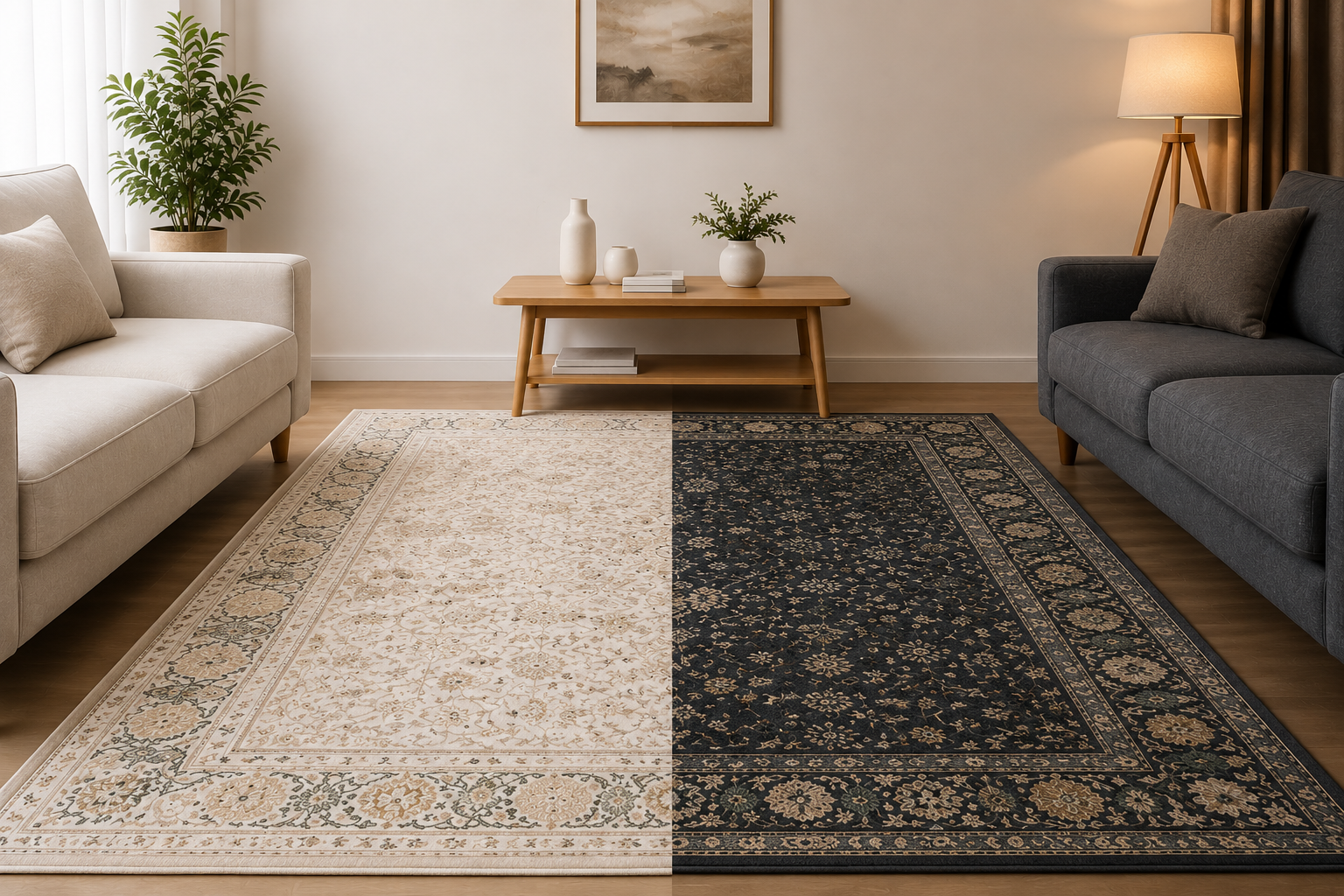
The Ultimate Guide: Light vs. Dark Rugs for Your Home
There is no one-size-fits-all rule when choosing between a light or dark rug. The final result depends on several factors, including room size, lighting, foot traffic, furniture color, pets or children, and your overall decor style.
Light rugs typically make a space feel more open, serene, and bright, making them ideal for small or dimly lit homes. On the other hand, dark rugs boldy define the living area and can create a warm, formal, and cozy atmosphere in larger rooms. The best choice is a rug that aligns with your personal taste while perfectly suiting your home’s actual conditions.
Pros and Cons of Light-Colored Rugs
Rugs with cream, ivory, beige, pearl, dove gray, or light gray backgrounds are excellent at reflecting both natural and artificial light. They blur the boundaries of the floor, making small living rooms feel more spacious and dark houses look brighter.
Versatility: These colors pair beautifully with a wide range of furniture—wood, gray, cream, green, blue, and brown—offering great flexibility for modern, minimalist, and neoclassical decor.
The Drawback: Spills, food stains, mud, and dark dirt show up much faster.
Pro Tip: In busy households, skip the solid white or cream. Instead, opt for a light background with medium-density patterns.
Pros and Cons of Dark-Colored Rugs
Navy, rich red, charcoal, smoky gray, brown, and dark green rugs add incredible depth and character to your decor. In large halls, they prevent the space from feeling cold and disjointed.
Stain Concealment: They hide dark stains and daily wear-and-tear much better than their lighter counterparts.
The Drawback: They aren’t always “cleaner.” Dust, white lint, and pet hair stand out sharply on very dark backgrounds.
Pro Tip: Using a dark rug in a small, dim room or one with heavy furniture can make the space feel boxed in. If you must go dark in a small room, choose a pattern that incorporates light accents like cream or light gray.
Which is Better for Small and Dim Living Rooms?
For compact living rooms or homes with limited windows and natural light, a light rug is usually the better choice—especially if your walls and furniture feature soft, neutral tones. Cream, beige, warm gray, pearl, and very light blue can visually expand the room.
However, avoid matching your rug, flooring, and furniture exactly, as too much uniformity can make the space feel flat and lifeless. A rug with a light background and patterns two or three shades darker maintains visual brightness while hiding everyday dirt better than a solid-colored rug.
Best Colors for Busy, High-Traffic Homes
In crowded homes, houses with toddlers or pets, and everyday living spaces, going entirely light or entirely dark isn’t always the best solution.
Go for Mid-Tones: Colors like medium gray, soft smoke, warm gray, taupe, and soft walnut—especially with multi-colored patterns—strike the perfect balance for hiding dirt, hair, dust, and various stains.
If you want light: Choose a moderately dense patterned design.
If you want dark: Pick a design with light streaks or floral motifs to camouflage dust and lint on the surface.
Coordinating Rug Color with Furniture and Flooring
Don’t just choose a rug based on light vs. dark; aim for a controlled color contrast between the rug and major decor elements.
Dark Room Elements: If you have dark furniture, heavy drapes, or brown flooring, a light rug reduces the visual heaviness of the room.
Light Room Elements: If the walls, floors, and furniture are all white, cream, or light gray, a dark or mid-tone rug adds necessary depth and a focal point.
Sofa Pairings:
Gray Sofa: Pair with a cream, dove gray, blue, or navy rug.
Cream Sofa: Pair with a traditional red, walnut, gray, or green rug.
Brown Sofa: Pair with a beige, cream, light gray, or dark blue rug for a balanced look.
Final Verdict: Should You Buy a Light or Dark Rug?
Choose Light if: You have a small home, low lighting, minimalist decor, and low foot traffic (requires regular cleaning and quick spill management).
Choose Dark if: You have a large hall, formal decor, and plenty of light colors on your walls and furniture (be prepared to vacuum light dust and lint).
Still Undecided? Go for a mid-tone rug (dove gray, beige, warm gray, or taupe) with mixed patterns. They are highly adaptable and much more practical for everyday life than extreme light or dark shades.
Frequently Asked Questions
Does a light rug make a room look bigger? Yes. Rugs with cream, beige, ivory, pearl, and light gray backgrounds blur floor boundaries, making small spaces appear more open and brighter.
Is a dark rug suitable for a small living room? A solid dark rug can make a small living room feel closed in. However, you can use a dark-background rug with plenty of light patterns, balanced with light furniture and curtains.
Do light rugs get dirty faster? They don’t necessarily get dirty faster, but they display dark stains and everyday grime more clearly. Choosing medium, multi-colored patterns mitigates this issue.
Are dark rugs better at hiding dirt? Dark rugs hide certain stains well, but dust, hair, and white lint are highly visible on colors like navy, black, and charcoal.
Light or dark rug: which is better for a house with kids? Patterned mid-tones (like medium gray, warm gray, and taupe) are the most practical. They hide both dark stains and light dust much better than solid rugs.
Should I get a light or dark rug for a gray sofa? For small, low-light spaces, a cream, beige, or light gray rug is ideal. In large, brightly lit rooms, a navy, charcoal, or smoky gray rug with light patterns looks stunning.
Is a light rug practical for high-traffic areas? You can use a light rug, but ensure the background isn’t completely solid. Opt for medium or mixed patterns to camouflage the signs of daily wear.
اشتراکگذاری
با استفاده از روشهای زیر میتوانید این صفحه رو به اشتراک بگذارید.